
TL;DR: The Bottom Line on LVT vs. Budget Laminate
The Core Difference: Budget laminate relies on a hygroscopic High-Density Fibreboard (HDF) core that will inevitably swell and fail if exposed to sitting water. Premium Luxury Vinyl Tile (LVT) utilizes a 100% waterproof polymer or stone-composite core.
Acoustic & Thermal Performance: Budget laminate produces a notorious hollow “clacking” sound underfoot. Premium LVT, especially when glued down or fitted with an acoustic underlay, absorbs impact noise and provides superior thermal transfer for underfloor heating (UFH).
Visual Fidelity: Premium LVT uses Embossed-In-Register (EIR) technology, perfectly matching the physical texture of the board to the high-definition photographic layer. Budget laminate often features a generic, repetitive texture over flat imagery.
The Verdict: If you are flooring a low-traffic bedroom on a tight budget, laminate is perfectly adequate. However, for ground-floor installations, high-traffic living areas, kitchens, bathrooms, or homes with pets, the initial premium paid for LVT is entirely offset by its longevity, structural stability, and daily performance.
The Cost of Luxury: Is Premium LVT Worth the Investment Over Budget Laminate?
In the modern flooring industry, the aesthetic gap between budget and luxury has narrowed, but the structural and material chasm remains vast. Homeowners and property developers frequently face the same dilemma: is it mathematically and practically justifiable to spend £40 to £70 per square metre on premium Luxury Vinyl Tile (LVT) when a visually similar budget laminate can be sourced for £10 to £15 per square metre?
To answer this, we must look past the photographic surface layer and forensically examine the cellular composition, thermodynamic stability, and long-term mechanical degradation of both materials. This comprehensive guide breaks down the science of both options to reveal their true total cost of ownership.
1. Material Composition and Structural Integrity
The fundamental difference between these two products lies in their core architecture.
Anatomy of Budget Laminate
Budget laminate is composed of up to 99% wood by-products. Its engine room is a High-Density Fibreboard (HDF) core, manufactured by compressing pulped wood fibres with melamine resins under extreme heat and pressure.
-
The Vulnerability: HDF is hygroscopic. It actively seeks to reach an equilibrium moisture content with its surrounding environment. If the relative humidity spikes, or if surface water seeps through the joints, the HDF core acts like a sponge. It undergoes irreversible dimensional expansion—a phenomenon known in the trade as “edge swelling” or “peaking.” Once laminate peaks, it cannot be sanded or repaired; it must be replaced.
Anatomy of Premium LVT (and SPC)
Premium LVT completely abandons organic, moisture-sensitive materials. It is engineered from layers of polyvinyl chloride (PVC), often fortified with a fibreglass mesh for tensile strength. The modern evolution of LVT is SPC (Stone Plastic Composite), which heavily doses the PVC core with natural limestone powder.
-
The Advantage: The resulting core is 100% non-hygroscopic. It is entirely inert to liquid water and atmospheric vapour. You could submerge a premium LVT plank in a bucket of water for a decade, and it would not alter its dimensional footprint by a single micron.
2. Wear Layers and Mechanical Abrasion
How long a floor looks new is dictated by the chemical makeup of its transparent top layer.
Budget Laminate: The Melamine Shield
Laminate wear resistance is measured by the AC (Abrasion Class) rating. Budget laminates typically carry an AC3 rating. The wear layer is a cellulose paper saturated in melamine-formaldehyde resin. While AC3 is suitably scratch-resistant for light domestic use, the melamine is incredibly brittle. If a heavy object is dropped, the resin shatters, exposing the vulnerable photographic paper and HDF core beneath to immediate moisture ingress.
Premium LVT: The Polyurethane Armour
High-end LVT relies on a commercially rated Polyurethane (PU) wear layer, often reinforced with ceramic bead technology or aluminium oxide. Crucially, premium LVT specifies the thickness of this layer—typically 0.55 mm to 0.70 mm for heavy domestic and commercial applications. Unlike brittle melamine, PU is highly elastomeric (flexible). It absorbs heavy impacts from dropped pans or dragged furniture without shattering, retaining its waterproof integrity.
3. Acoustic Profiles: The “Clack” vs. The “Thud”
One of the most frequent complaints regarding budget laminate is its acoustic profile. Because HDF is lightweight, rigid, and installed as a “floating” floor over a foam underlay, it acts like a drum skin. Footsteps generate airborne noise and a distinctive, hollow “clacking” sound.
Premium LVT, owing to its dense limestone or heavy PVC core, boasts a significantly higher mass-to-volume ratio. When walked upon, the mass deadens acoustic vibrations, resulting in a solid, quiet “thud” that perfectly mimics the acoustic feedback of genuine solid hardwood or stone.
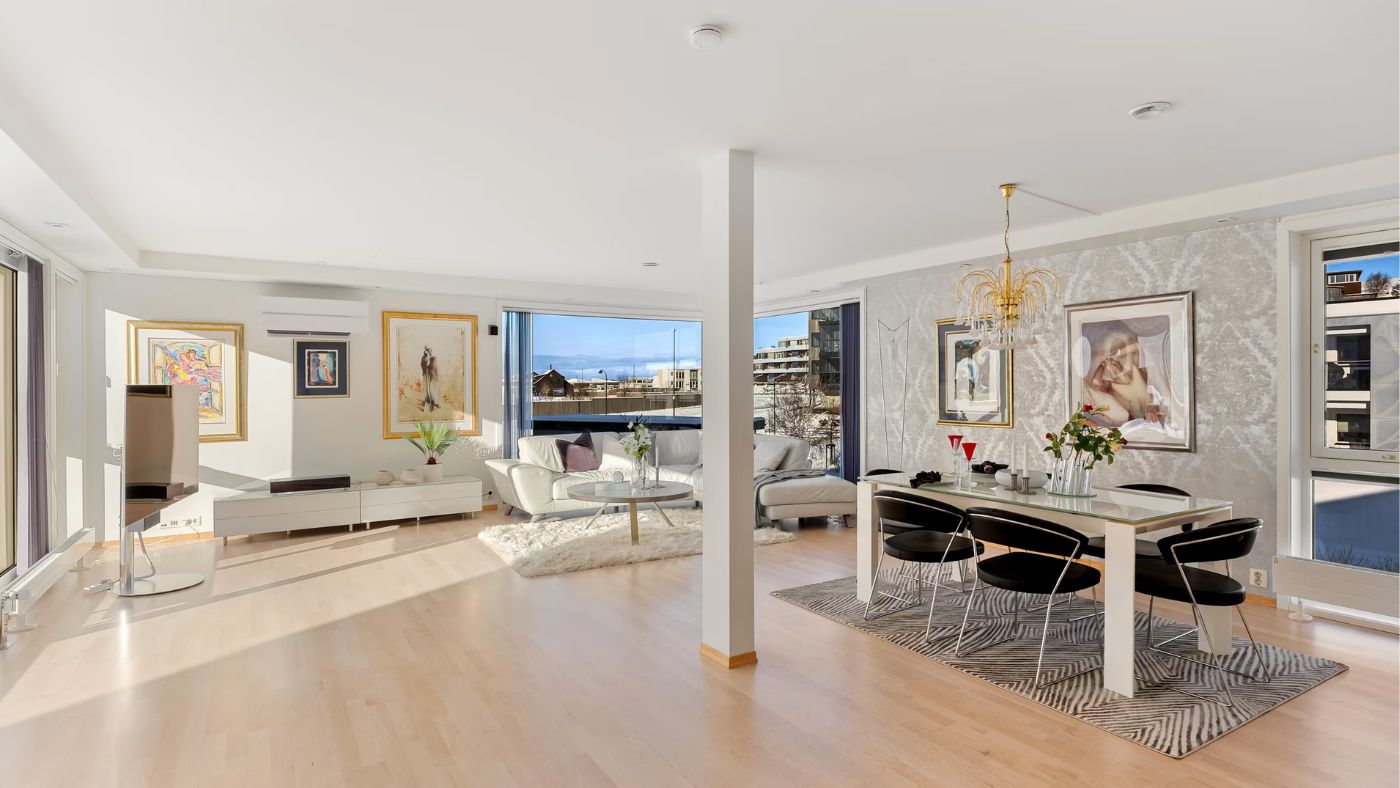
4. Visual Matrix: Budget Laminate vs. Premium LVT
Technical Matrix: LVT vs. Budget Laminate
| Specification | Budget Laminate (£10-£15/m²) | Premium LVT / SPC (£40-£70/m²) |
|---|---|---|
| Core Composition | High-Density Fibreboard (Wood) | Polyvinyl / Limestone Composite |
| Water Resistance | Poor (Fails if edges are breached) | 100% Impervious |
| Acoustic Profile | High impact noise (Hollow sound) | Superior noise deadening (Solid feel) |
| Visual Fidelity | Flat print, generic repetitive texture | EIR (Texture matches grain exactly) |
| Thermal Resistance (UFH) | Moderate (Can act as an insulator) | Excellent (Highly conductive) |
| Expected Lifespan | 5 to 10 Years | 25 to Lifetime Guarantees |
5. Total Cost of Ownership: The Replacement Cycle
When evaluating “cost,” one must look at the lifecycle. A budget laminate floor laid in a busy family kitchen will almost certainly face a catastrophic moisture event (a leaking dishwasher, an over-mopped floor, a dropped heavy pot) within a 5-to-7-year window.
Replacing a failed £15/m² laminate floor requires paying for the uplift of the old floor, disposal costs, new underlay, new materials, and new labour. Over a 20-year period, a homeowner might replace a budget laminate floor three times.
A premium LVT floor installed correctly will easily survive that same 20-year period without a single structural failure. Therefore, the “expensive” LVT is, mathematically, the far cheaper option over the lifespan of the property.
Frequently Asked Questions
1. Is premium LVT completely scratch-proof against large dogs? No flooring is 100% scratch-proof. However, the thick polyurethane (PU) wear layer on premium LVT is highly scratch-resistant and elastomeric, meaning it yields slightly under a dog’s claw rather than gouging. If minor micro-scratches do occur, premium LVT can be spot-treated with PU dressing kits, whereas scratched laminate is permanently damaged.
2. I am fitting a bathroom; can I use a water-resistant laminate? “Water-resistant” laminate is not waterproof. It usually features a hydrophobic coating on the surface and waxed joints, giving you roughly 24 to 72 hours to wipe up a spill. In a bathroom with high ambient humidity, condensation, and regular puddles, the core will eventually succumb. Premium LVT or SPC is the only correct choice for a bathroom.
3. Does LVT require more subfloor preparation than laminate? Yes, significantly more. Because LVT (especially glue-down LVT) is dense and relatively thin (2.5 mm to 5 mm), it will telegraph any imperfections in the subfloor directly to the surface. The concrete or timber subfloor must be flawlessly levelled with a self-levelling smoothing compound or flooring-grade plywood before installation. Laminate’s rigid 8 mm+ thickness is much more forgiving of minor subfloor dips.
4. Which is better over Underfloor Heating (UFH)? Premium LVT is vastly superior for UFH. Laminate (wood) is a natural insulator, meaning it slows the transfer of heat from the pipes to the room, forcing your boiler or heat pump to work harder. LVT and SPC are highly thermally conductive, allowing the heat to pass through into the room rapidly and efficiently.
5. Are budget laminates bad for the environment? Budget laminates rely on synthetic melamine-formaldehyde resins to bind the wood dust. While emissions are strictly regulated in the UK (look for E1 class ratings), they are still synthetic chemicals. However, they do utilize recycled wood by-products.
6. Is LVT eco-friendly? Standard LVT is made from PVC, a petroleum-based plastic, which is difficult to recycle at the end of its life. However, the industry is shifting. Many premium LVT brands now incorporate up to 50% post-consumer recycled PVC into their backing layers, and the extreme longevity of the product offsets the carbon footprint of frequent replacements.
7. What is “Embossed-in-Register” (EIR)? EIR is the hallmark of premium LVT and ultra-high-end laminates. Standard budget floors print a wood grain pattern and then stamp a generic, repetitive texture over the top. EIR uses advanced manufacturing to ensure the physical stamped texture perfectly aligns with the printed grain. If you see a knot, you will feel that exact knot.
8. Should I choose “Click” LVT or “Glue-down” LVT? Glue-down LVT (Dryback) requires professional installation, perfect subfloor prep, and high-temperature adhesives, but offers the most stable, quietest, and longest-lasting floor. Click LVT (or SPC) is faster and cheaper to install as a floating floor, making it ideal for competent DIYers, though it requires expansion gaps at the perimeters.
9. Will LVT fade in my conservatory? Standard PVC-core LVT is sensitive to extreme heat and UV light; it can fade and warp. If installing in a conservatory, you must specify a rigid-core SPC (Stone Plastic Composite) which is dimensionally stable up to 50°C, and ensure it features premium UV inhibitors in the topcoat.
10. Does premium LVT add more value to a house than laminate? Yes. In the high-end property market, buyers and surveyors can immediately identify the acoustic and tactile differences between budget laminate and premium LVT. High-quality LVT (such as Amtico or Karndean in the UK) is viewed as a premium fixture, similar to engineered wood or porcelain tile, which positively influences the perceived value of the property.









0 Comments