
TL;DR: The Blueprint for Modern Rustic Flooring
The Reclaimed Reality: Genuine reclaimed timber is structurally unpredictable, prone to splintering, often harbours latent woodworm, and is highly susceptible to warping over modern underfloor heating (UFH).
The Premium Alternative: Distressed engineered hardwood offers the exact aesthetic of reclaimed timber (via hand-scraping, wire-brushing, and ammonia fuming) but utilises a dimensionally stable multi-ply core that will not cup or bow.
The High-Traffic Solution: Stone Plastic Composite (SPC) and Luxury Vinyl Tile (LVT) with Embossed-In-Register (EIR) technology mimic the 3D texture of ancient wood while remaining 100% waterproof and highly dent-resistant.
The Bottom Line: You no longer need to sacrifice modern thermal stability, hygiene, or structural integrity to achieve a heritage, lived-in aesthetic.
Reclaiming Style: How to Achieve a Reclaimed Wood Look with Modern Durability
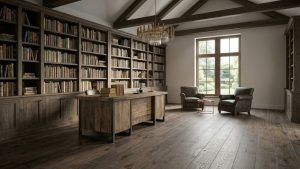
The aesthetic appeal of genuine reclaimed timber is undeniable. It evokes a sense of history, character, and organic warmth that perfectly counterbalances the stark lines of modern architecture. However, from a structural and material science perspective, installing centuries-old barn wood or factory flooring into a highly insulated, centrally heated modern UK home is fraught with risk.
To bridge the gap between heritage aesthetics and modern performance, the flooring industry has pioneered advanced texturing and structural techniques. This comprehensive guide details the material science behind authentic distressed finishes, structural stability, and how to successfully specify a reclaimed look without compromising on modern durability.
1. The Structural Deficits of Genuine Reclaimed Timber
Before exploring the alternatives, one must understand why authentic reclaimed solid wood often fails in modern applications.
Old timber was acclimated to drafty, uninsulated environments with naturally fluctuating humidity. When this wood is salvaged and placed into a modern home—characterised by airtight triple-glazing, HVAC systems, and continuous hydronic underfloor heating—the wood experiences severe hygroscopic shock.
-
Dimensional Instability: The rapid reduction in ambient moisture causes solid reclaimed planks to shrink unevenly, leading to severe cupping, bowing, and structural failure of the tongue-and-groove joints.
-
Hidden Contaminants: Salvaged wood frequently contains oxidised iron nails, lead-based paint residues, and dormant woodboring insects (woodworm).
-
Surface Degradation: The highly porous, weathered surface of genuine old timber acts as a sponge for modern household spills, making it inherently unhygienic and difficult to maintain.
2. Modern Solution 1: Distressed Engineered Hardwood
Engineered hardwood represents the gold standard for achieving a reclaimed look. It combines a top layer (lamella) of genuine European Oak or Walnut with a cross-directional multi-ply backing. This prevents the tangential shrinkage that plagues solid old wood.
To recreate a century of wear on a newly milled lamella, manufacturers employ specific mechanical and chemical treatments:
Mechanical Distressing
-
Wire-Brushing: Heavy rotary steel brushes are run along the grain of the wood. This rips out the softer “spring wood” fibres between the growth rings, leaving the harder “summer wood” raised. It creates a tactile, weathered surface that brilliantly hides modern pet scratches and daily wear.
-
Hand-Scraping & Undulating: Artisans use traditional draw-knives to manually scoop shallow depressions into the surface of the plank, mimicking the uneven wear caused by decades of heavy footfall.
-
Tumbling: Wood blocks are literally tumbled in large drums with metal chains, bolts, and stones to create authentic indentations, softened edges, and random bruising before being milled into flooring planks.
Chemical Distressing (Fuming/Smoking)
Instead of relying on artificial wood stains that sit on the surface and eventually wear off, high-end engineered wood undergoes “fuming.” The timber is placed in a sealed chamber and exposed to ammonia gas. The ammonia reacts chemically with the natural tannic acids deep inside the oak. This darkens the wood from the inside out, creating rich, grey-brown, sun-baked hues that are identical to aged structural beams and are entirely fade-resistant.
3. Modern Solution 2: Rigid Core SPC and Luxury Vinyl Tile (LVT)
For high-moisture areas (bathrooms, utility rooms) or commercial spaces where even engineered wood is not durable enough, the synthetic market has perfected the reclaimed illusion through micro-engineering.
Embossed-In-Register (EIR) Technology
Historically, vinyl flooring featured a flat photograph of wood glued beneath a smooth wear layer. Today, premium SPC and LVT utilise Embossed-In-Register (EIR) technology. During the pressing process, heavy steel plates stamp a 3D texture into the wear layer that perfectly aligns with the high-definition photographic film below it. If there is a visual knot or a crack in the “wood,” you will physically feel the exact contours of that knot or crack.
-
The Advantage: You achieve the visual chaos of cracked, split, and sawn barn wood, but the surface is sealed by a commercially rated polyurethane wear layer that is 100% waterproof and immune to splintering.
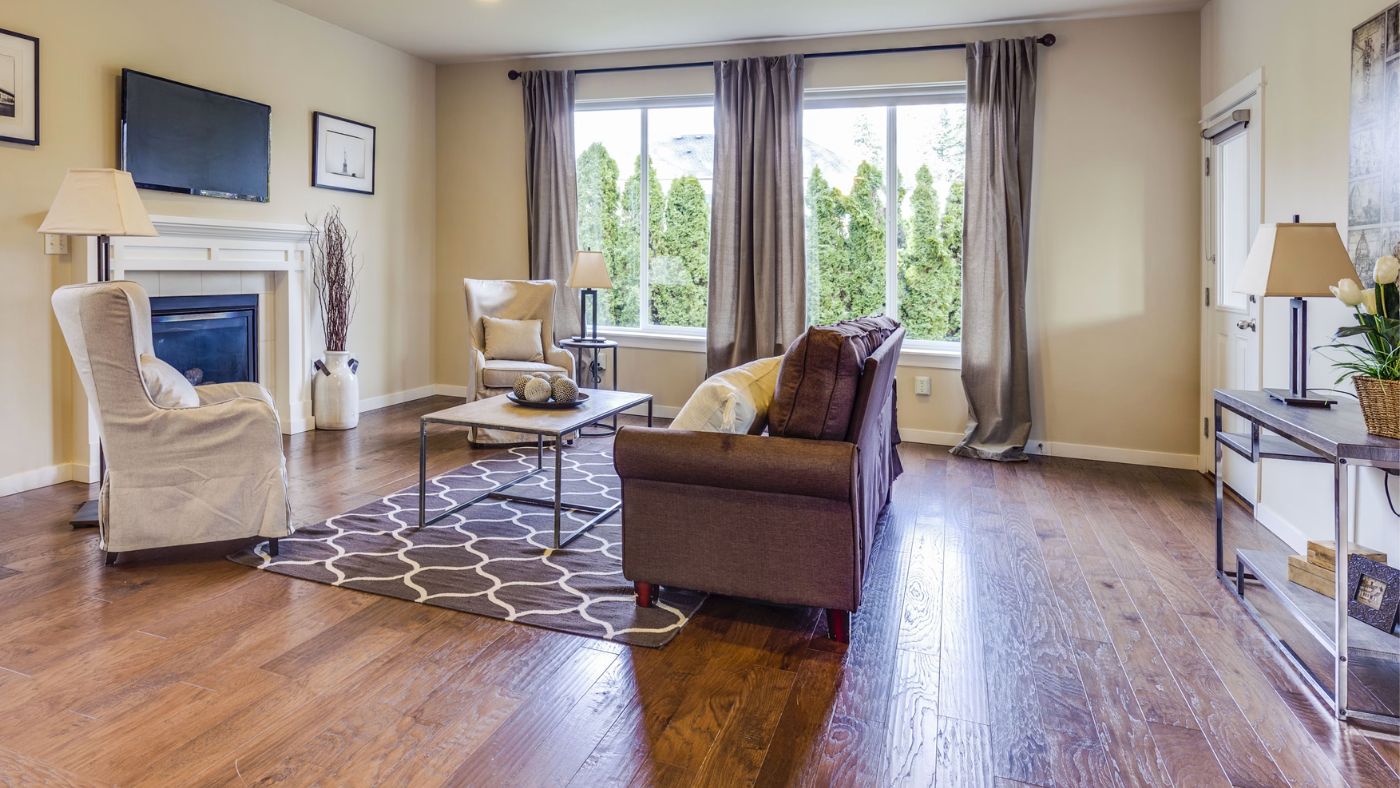
4. Visual Matrix: Reclaimed vs. Modern Alternatives
Material Comparison: Achieving the Heritage Aesthetic
| Feature | Authentic Reclaimed Solid Wood | Distressed Engineered Oak | EIR Luxury Vinyl / SPC |
|---|---|---|---|
| Dimensional Stability (UFH) | Very Poor (High risk of warping) | Excellent (Multi-ply core) | Exceptional (Limestone/PVC core) |
| Authentic Feel & Warmth | Maximum (100% natural) | Maximum (Real wood lamella) | Moderate (Cold underfoot without UFH) |
| Maintenance & Hygiene | Difficult (Porous, splinters) | Moderate (Requires occasional oiling) | Easy (100% waterproof, wipe clean) |
| Installation Cost | Extremely High (Bespoke fitting) | Moderate / High | Low / Moderate (Click-system) |
5. Specification Tips: Nailing the Look
If you opt for modern distressed flooring, keep these architectural rules in mind to maintain the illusion of heritage timber:
-
Wide and Random Planks: Old trees yielded incredibly wide planks. Choose an engineered board with a width of at least 190 mm, up to 240 mm. Furthermore, authentic floors were laid using whatever lengths came out of the mill. Look for “random length” packages rather than fixed-length boards, which look too modern and manufactured.
-
Ultra-Matte Finishes: Genuine worn timber has zero gloss. Avoid traditional polyurethanes. Specify a Hardwax Oil finish, or an invisible, ultra-matte lacquer (often rated at 5% gloss or lower) that protects the wood without creating a plastic sheen.
-
Bevelled Edges: Ensure the planks have a micro-bevel or a hand-scraped bevel on the edges. When clicked together, this creates a tiny V-groove between the boards, emphasising the individual planks just like an old floor.
Frequently Asked Questions
1. Is engineered distressed wood as durable as actual reclaimed wood? Yes, and in most domestic settings, it is vastly superior. Genuine reclaimed wood is often structurally fatigued and prone to splintering under heavy loads. A modern engineered oak floor with an aluminium-oxide lacquer or hardwax oil provides vastly superior surface protection while maintaining the aged aesthetic.
2. Can I put reclaimed-look LVT or SPC over underfloor heating? Absolutely. Because SPC (Stone Plastic Composite) has a rigid core made from limestone powder and stabilisers, it exhibits minimal thermal expansion. It is incredibly stable over hydronic and electric underfloor heating systems, provided the surface temperature does not exceed the manufacturer’s limit (typically 27°C).
3. How do they make new wood look old without damaging its structure? Manufacturers distress the top 1–2 mm of the wear layer only. Wire-brushing simply removes the softest cellular fibres on the surface, while chemical fuming alters the colour via a natural reaction with tannins. The 14 mm to 18 mm multi-ply birch or eucalyptus core underneath remains untouched and structurally flawless.
4. Are there any risks of pests (woodworm) in distressed engineered timber? No. All newly manufactured engineered wood undergoes kiln drying. The timber is baked at high temperatures (often exceeding 60°C for extended periods), which completely eradicates any latent moisture, fungi, or dormant insect larvae.
5. What exactly is Embossed-in-Register (EIR) technology? EIR is a manufacturing technique used in premium LVT and laminate. Standard vinyl has a textured surface that does not match the printed wood picture beneath it. EIR synchronises the 3D texturing plate perfectly with the photographic layer. If you see a digital knot, you will physically feel the bump and grain of that exact knot.
6. Does a heavily distressed floor catch more dirt and grime? It can. Deeply hand-scraped or wire-brushed floors feature undulations where dust can settle. However, a good quality hardwax oil finish prevents dirt from penetrating the pores of the wood. Routine sweeping and occasional vacuuming using a hard-floor brush attachment will keep the floor perfectly clean.
7. Can I sand a hand-scraped engineered floor in the future? You can, but doing so will erase the distressed aesthetic. Sanding the floor flat will remove the hand-scraped undulations, the wire-brushing, and potentially the chemically fumed colour (if it hasn’t penetrated the full depth of the lamella). It is better to use a liquid “refresher” oil or screen-and-recoat the floor rather than aggressively sanding it.
8. Is reclaimed-look flooring suitable for a bathroom? Engineered wood is not recommended for full bathrooms due to ambient moisture and standing water risks. If you want the rustic look in a bathroom, you must specify a 100% waterproof EIR Luxury Vinyl Tile (LVT) or a high-definition porcelain wood-look tile.
9. Will the dark colours of smoked/fumed wood fade in my conservatory? Chemical fuming is much more UV-stable than traditional topical wood stains because the colour change happens at a molecular level within the wood. However, all natural timber will undergo some degree of photochemical change under intense, direct sunlight. Using UV-filtering glass or blinds is highly recommended.
10. How does the cost compare between genuine reclaimed timber and modern distressed alternatives? Genuine reclaimed timber is a luxury product. Sourcing, de-nailing, kiln-drying, and bespoke installation make it incredibly expensive. Distressed engineered wood provides the exact same visual impact for roughly 30% to 50% less cost, while reclaimed-look LVT/SPC can be installed for a fraction of the price of genuine timber.



0 Comments