
TL;DR: The Quick Verdict
Wood grading refers to the visual appearance of the timber, not its structural strength or durability. Prime Grade (AB) is the cleanest, most uniform look with minimal knots. Select Grade (ABC) offers a balanced middle ground with small knots. Natural Grade (ABCD) showcases the true character of the wood with frequent knots and colour shifts, while Rustic Grade (CD) is the most organic, featuring large knots, filled cracks, and dramatic tonal variation.
How to Choose the Right Wood Grade: From Prime to Rustic Explained
One of the biggest myths in the UK flooring industry is that “Prime” wood is stronger than “Rustic” wood. In reality, both come from the same tree. The difference lies in which part of the tree the plank was cut from and how many “imperfections”—like knots and sapwood—are present.
As we move into 2026, the trend is shifting away from clinical perfection. While Prime grade remains a staple for luxury minimalist apartments, Rustic and Natural grades are becoming the top choice for homeowners who want their floors to look “lived-in” and authentic.
1. Prime Grade (AB): The Minimalist’s Dream
Prime grade is the “Crème de la Crème” of timber. These planks are cut from the centre of the log, where the wood is at its most consistent.
-
Visuals: Very few, if any, knots. If knots are present, they are usually “pin knots” (no larger than 5-10mm).
-
Colour: Exceptional tonal consistency. You won’t see dramatic jumps from light to dark between planks.
-
Best For: Modern, high-end developments, galleries, and “Quiet Luxury” interiors where the floor needs to be a seamless, quiet backdrop.
2. Select Grade (ABC): The Balanced Professional
Often called “Classic Grade,” this is the most versatile option for British homes. It provides a “clean” look but with enough detail to remind you it’s a natural product.
-
Visuals: A mix of clean boards and planks with small-to-medium knots (up to 20mm).
-
Colour: Some variation in tone, often featuring a small amount of “sapwood” (the lighter, outer part of the tree).
-
Best For: Most residential renovations. It feels premium but has enough character to hide the occasional bit of household dust or a micro-scratch.
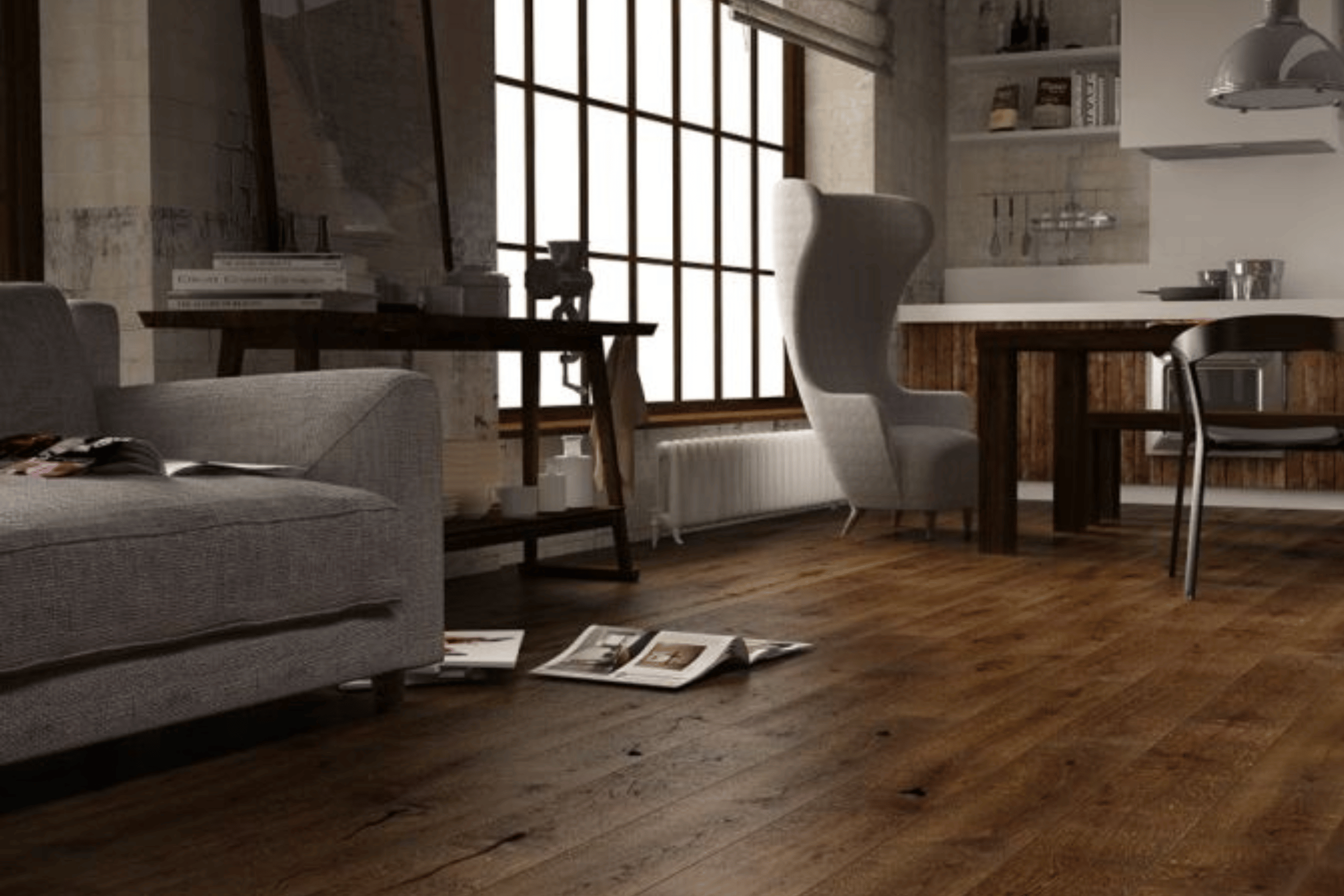
3. Natural Grade (ABCD): The True Timber Look
In 2026, Natural grade (sometimes called Mill Run) is seeing a huge spike in popularity. It celebrates the wood exactly as nature intended.
-
Visuals: Frequent knots of varying sizes, some of which are filled with dark or light filler to add contrast. You may see “medullary rays” (silvery streaks) which are a sign of high-quality oak.
-
Colour: Noticeable tonal shifts. You’ll see the full spectrum of the oak’s palette, from honeyed blondes to deeper tans.
-
Best For: Open-plan living areas where you want the floor to feel warm and textured.
4. Rustic Grade (CD): The Organic Powerhouse
Rustic grade is all about “The Lived-In Aesthetic.” It is the most sustainable grade because it uses more of the tree, resulting in less wastage.
-
Visuals: Large, chunky knots, filled cracks, and “character marks.” The grain pattern is often wild and swirling.
-
Colour: High contrast. One board might be significantly darker than the next, creating a vibrant, “patchwork” energy.
-
Best For: Period properties, barn conversions, and busy family homes.
-
Pro Tip: Rustic grade is the best at hiding wear and tear. Scratches from pets or dents from toys simply blend into the natural “imperfections” of the wood.
| Feature | Prime (AB) | Select (ABC) | Natural (ABCD) | Rustic (CD) |
| Knot Size | Minimal/Pin | Small (<20mm) | Medium/Large | Unlimited |
| Colour Flow | Very Uniform | Consistent | Varied | High Contrast |
| Sapwood | None/Trace | Very Limited | Visible | Abundant |
| Price Point | Premium (££££) | Mid-High (£££) | Competitive (££) | Best Value (£) |
Frequently Asked Questions
Does Prime grade last longer than Rustic grade? A: No. The structural integrity is identical. Whether it is Prime or Rustic, the wood’s hardness (measured on the Janka scale) remains the same. The “Grade” is purely a visual category.
Why is Prime grade more expensive? A: It’s a matter of scarcity. Only a small percentage of a tree yields “Prime” timber without knots. Because the supply is lower and the demand for a “clean” look is high, the price is naturally higher.
Which wood grade is best for pets and children? A: Rustic or Natural grades are much better for busy households. On a Prime floor, a single scratch stands out like a sore thumb. On a Rustic floor, scratches often disappear into the grain and knots, making the floor look better as it ages.
Can I mix grades in one house? A: Absolutely. Many UK homeowners use Prime or Select in the formal “good” lounge and Rustic in the high-traffic kitchen and hallway to save on budget while adding durability where it’s needed most.
Is Rustic grade “poor quality” wood? A: Not at all. In fact, many designers prefer Rustic grade because it proves the floor is real timber and not a printed laminate. In 2026, “imperfection” is seen as a luxury feature, not a flaw.




0 Comments