
TL;DR: The Quick Verdict
The Big Myth: Small rooms do not need narrow floorboards. Narrow boards create a busy grid of seams that clutters the eye and shrinks the room.
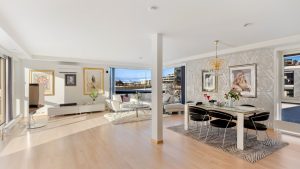
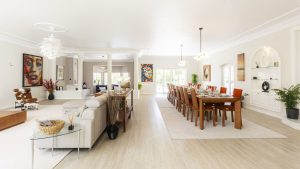
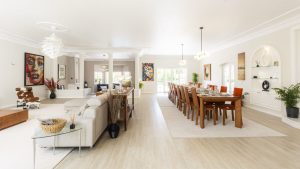
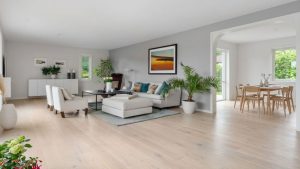
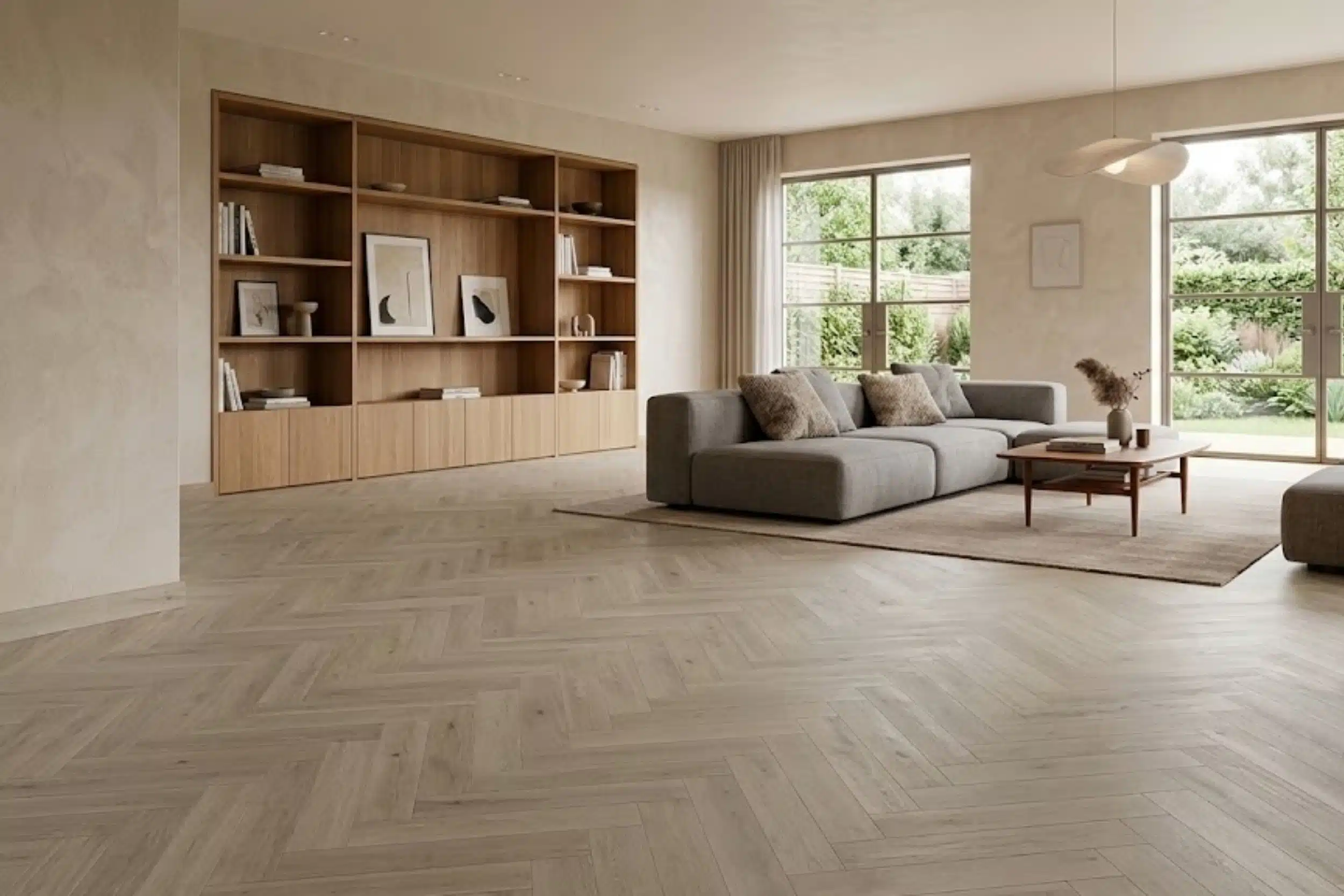
The Spatial Secret: Wide planks (180mm to 240mm width) dramatically reduce the number of visible joints. Fewer seam lines mean less visual noise, creating an open, continuous floor that tricks the brain into perceiving the room as much larger.
The Ideal Spec: Choose Engineered Oak in a Prime or Select Grade with a light, neutral finish (like pale oak, ash, or a whitewash). Engineered timber handles UK humidity variations without warping, and cleaner grades reduce distracting knots.
Installation Trick: Run long planks parallel to the longest wall or toward the primary light source to elongate the space. Flow the same flooring seamlessly through doorways without thresholds to blur the boundaries between rooms.
When designing a home, flooring is often treated as an afterthought—something to choose after the paint colors are selected and the furniture is ordered. However, interior architects know that the floor is the single largest uninterrupted surface in any property. It dictates how light behaves, how the eye navigates a room, and how we perceive space.
If you are dealing with compact UK spaces—whether a Victorian terrace bedroom, a conversion flat hallway, or a modern urban apartment—the choice of floorboard width is your most powerful tool for spatial illusion.
This comprehensive guide breaks down the science, design principles, material mechanics, and installation tactics of using wide plank flooring to make small rooms feel significantly larger.
1. The Geometry of Illusion: Why Wide Planks Work
The idea that small rooms require small tiles or narrow floorboards is a persistent design myth. In practice, the exact opposite is true. The human brain calculates the scale of a room based on visual data points.Every single seam, joint, and bevel line between floorboards acts as a data point. When a floor is saturated with these lines, the brain registers “busy-ness” and fragmentation.
2. Choosing the Right Width and Length Dimensions
“Wide plank” is a broad industry category, but specific dimensions achieve the best results in compact spaces.
| Classification | Width Range | Spatial Impact in Small Rooms |
| Standard Strip | 60mm – 120mm | Creates a grid-like, busy pattern; compresses small spaces. |
| Traditional Plank | 120mm – 180mm | Safe but conventional; does not actively alter spatial perception. |
| Wide Plank | 180mm – 240mm | The Sweet Spot. Maximum line reduction without overwhelming the room’s proportions. |
| Super-Wide Plank | 250mm – 300mm+ | Exceptional for open-plan zones; requires highly stable engineered construction. |
This cross-directional core counteracts the natural movement of the wood. For small spaces, engineered wide planks offer distinct advantages:
-
High Stability: They will not warp or gap when exposed to changing humidity levels.
-
Underfloor Heating (UFH) Compatibility: Engineered planks easily transfer heat without cracking, allowing you to ditch bulky radiators and free up valuable wall space.
-
Thinner Profiles Available: You can get premium wide looks without sacrificing crucial floor-to-ceiling height.
4. Color Psychology, Finishes, and Grade Selection
The wood species, color tone, and surface finish determine how much light your floor reflects—a vital consideration for making a room look massive.
Wood Species and Tones
To maximize space, look toward light-reflecting palettes:
-
European Oak: The gold standard for versatility. It can be finished with white oils or raw effects to keep the room light and neutral.
-
Ash: Offers pale, clean tones with distinct grain patterns that feel airy and crisp.
-
Maple: Features a subtle grain structure that keeps the floor looking remarkably smooth and uniform.
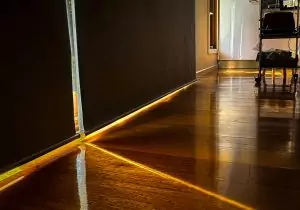
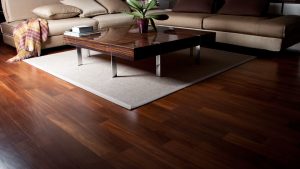
Design Rule: Avoid dark, heavy finishes (like stained walnut or wenge) in small spaces unless the room receives an abundance of natural light. Dark floors absorb light, drawing the perimeter of the room inward.
Surface Finishes: Matt vs. Gloss
-
Matt and Brushed Oils: These finishes diffuse light softly across the surface, emphasizing the wood’s texture and masking everyday dust or scratches.
-
Satin and Lacquered Finishes: These provide a subtle sheen that reflects light back up into the room, making dark spaces feel brighter and more open.
Choosing the Right Grade
Wood flooring is graded by its visual characteristics:
-
Prime Grade: Cut from the center of the log; clean, uniform appearance with minimal color variation and very few, small knots. Highly recommended for small spaces as it keeps visual distractions to an absolute minimum.
-
Select/Nature Grade: Contains a few more natural knots and slight color shifts, adding character without feeling cluttered.
-
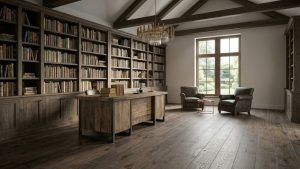
Rustic Grade: Showcases heavy grain swirls, filled cracks, and large knots. While full of charm, rustic wide planks can sometimes introduce too much detail into a compact room, competing with your furniture and decor.

5. Architectural Installation Tactics for Maximum Space
The way your wide planks are oriented and installed can completely redefine a room’s apparent proportions.
The Diagonal Approach
If you have an awkwardly shaped or exceptionally tight space, consider installing your wide planks at a 45-degree angle across the room. Diagonal lines draw the eye across the longest dimensions of a space (from corner to corner), creating a striking look that makes a square room feel vastly more expansive.
6. Maintenance and Preservation Tips
To keep a wide plank floor looking its best and maintaining its value, proper care is simple but specific:
-
Control Moisture: Never use a dripping wet mop on hardwood floors. Use a damp microfiber cloth with a dedicated, pH-neutral wood floor cleaner.
-
Protect High-Traffic Zones: Use felt pads beneath all furniture legs. In small rooms, furniture tends to shift frequently, and deep scratches can interrupt the clean, expansive look of your floorboards.
-
Maintain Stable Humidity: Keep your home’s relative humidity between 40% and 60% to minimize any subtle movement in the timber layers.
Frequently Asked Questions
Q1: Won’t wide planks make a small room feel crowded or cluttered?
Answer: It is actually the exact opposite. Narrow planks create a high volume of visual “seams” across the floor, resulting in a dense, grid-like pattern that the brain interprets as cluttered. Wide planks (180mm–240mm) drastically reduce the number of these joint lines. With fewer interruptions to catch the eye, the floor becomes a single, continuous expanse, making the room feel significantly more open and airy.
Q2: What is the ideal board width for a compact UK bedroom or living space?
Answer: The “sweet spot” for compact residential spaces is 180mm to 220mm. Going narrower misses out on the spatial benefits, while choosing ultra-wide boards (over 250mm) can look out of proportion if the room is exceptionally tight. A 180mm–220mm engineered board strikes the perfect balance between reducing joint lines and maintaining a realistic scale.
Q3: Should wide planks be laid horizontally or vertically in a narrow room?
Answer: Always run your planks parallel to the longest wall in a narrow space. This layout elongates the room by drawing the eye outward along the length of the boards. If the room is relatively square, orient the planks so they point toward the main window or primary source of natural light; this allows light to stream down the grain lines rather than casting shadows across the joints.
Q4: Is solid wood or engineered timber better for wide plank installations?
Answer: Engineered hardwood is highly recommended for wide planks in the UK. Wide solid timber boards are highly susceptible to shifting, cupping, and gapping when exposed to seasonal humidity changes. Engineered planks feature a multi-layer plywood core that counteracts this natural movement, offering exceptional dimensional stability while showcasing a real wood top surface.
Q5: Can I install wide plank engineered flooring over underfloor heating?
Answer: Yes, provided you select an engineered timber floor. The structural stability of engineered planks allows them to safely transfer heat without warping, splitting, or cracking. Eliminating traditional wall radiators is an excellent secondary trick for freeing up floor area and making small rooms look massive.
Q6: Which wood grade should I choose to maximize the illusion of space?
Answer: Opt for Prime or Select grade timber over Rustic grade. Prime grade boards are harvested with clean, uniform grain structures and very few, small knots. Rustic grades feature heavy character marks, color variations, and large knots which—while beautiful—introduce extra visual detail that can overwhelm a small room.
Q7: Do light or dark wide planks work best in smaller properties?
Answer: Light-colored woods (like pale European oak, ash, or maple) are the best choice for expanding a space. Light finishes maximize light reflectivity, bouncing sunshine and ambient light back into the room to push the walls outward visually. Dark wood floors absorb light and tend to draw the boundaries of a small room inward unless the room has floor-to-ceiling windows.
Q8: Why do wide planks require stricter subfloor preparation?
Answer: Because a wide board spans a larger surface area, it has less flexibility to “bend” over dips or bumps in the subfloor. If your subfloor is uneven, wide planks will bridge the gaps, resulting in under-foot bouncing, annoying squeaks, or eventual damage to the interlocking joints. The subfloor must be perfectly flat (usually within a 3mm tolerance across a 2-metre span) before installation.
Q9: Can I run wide plank flooring through doorways without thresholds?
Answer: Yes, and this is highly encouraged for small homes. By undercutting your door frames and floating or gluing the flooring seamlessly from a hallway straight into a room, you eliminate visual breaks. This unbroken flow tricks the mind into seeing the entire flat or house as one single, continuous, massive space.
Q10: Are wide flooring planks more expensive than standard narrow boards?
Answer: Generally, yes. Sourcing wider, longer timber requires larger logs from older, premium trees, which increases material costs. However, installation times are often quicker because there are fewer individual boards to lay to cover the same square footage, which can partially offset overall labor fees.






0 Comments